
How to Cut Office Costs With Coworking in 2026
How flexible workspaces can help small businesses reduce fixed costs while creating a professional environment that can evolve with them.
For a small business, the cost of an office extends well beyond the rent.
Internet, utilities, furniture, cleaning, meeting rooms and the everyday responsibility of maintaining a workplace all contribute to the real cost of having a permanent space.
For businesses looking more closely at their overheads in 2026, flexible workspaces for small businesses offer a different approach. One that provides the infrastructure of a professional office without requiring the business to build and manage everything itself.
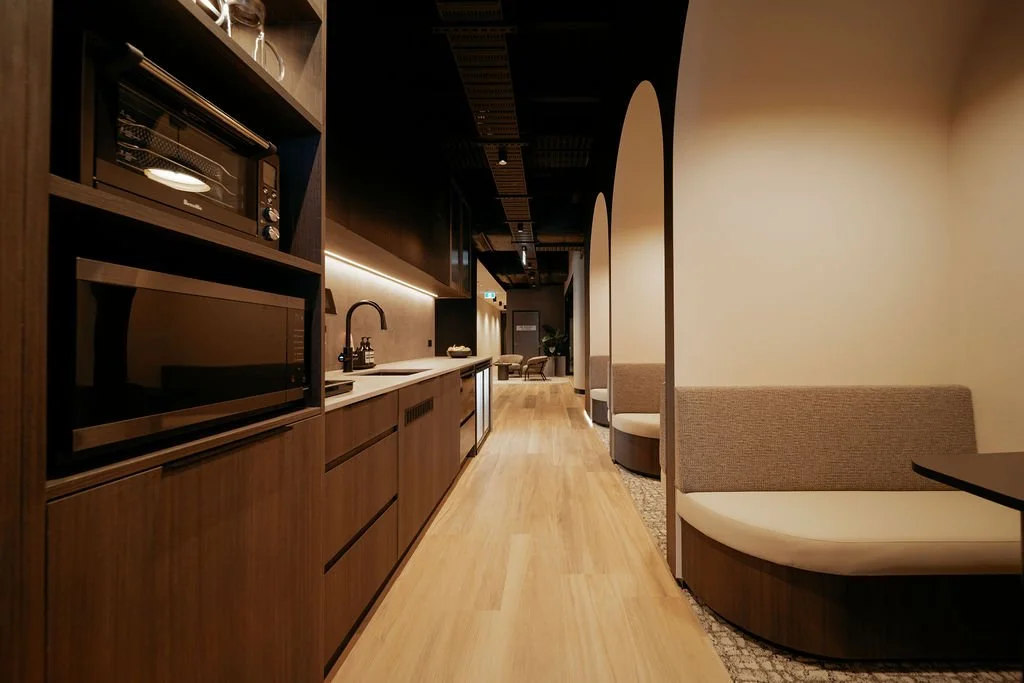
The true cost of an office
A traditional office can bring certainty, but it can also create a long list of fixed costs.
There is the lease itself, followed by the fit-out, furniture, technology, utilities and ongoing maintenance required to keep the space running.
For tiny professional service businesses, those costs can carry disproportionate weight. A meeting room that sits empty most of the week or desks reserved for a hybrid team can quickly become expensive space that is rarely used.
A shared office space changes the equation by bringing many of those requirements together.
Rather than investing in an entire workplace, businesses can access the spaces and amenities they need as part of a more flexible arrangement.
Paying for the way you actually work
The way businesses use offices has changed.
Teams may work across different locations. Some days require collaboration and client meetings, while others are better suited to working remotely.
Yet a traditional lease continues to cost the same regardless of how often the space is being used.
Coworking spaces can give smaller businesses more freedom to shape their workspace around their actual working patterns.
For some, that may mean a private office. For others, it may simply mean having a professional base, somewhere to meet clients and access to meeting rooms when required.
It is less about having more space and more about having the right space.
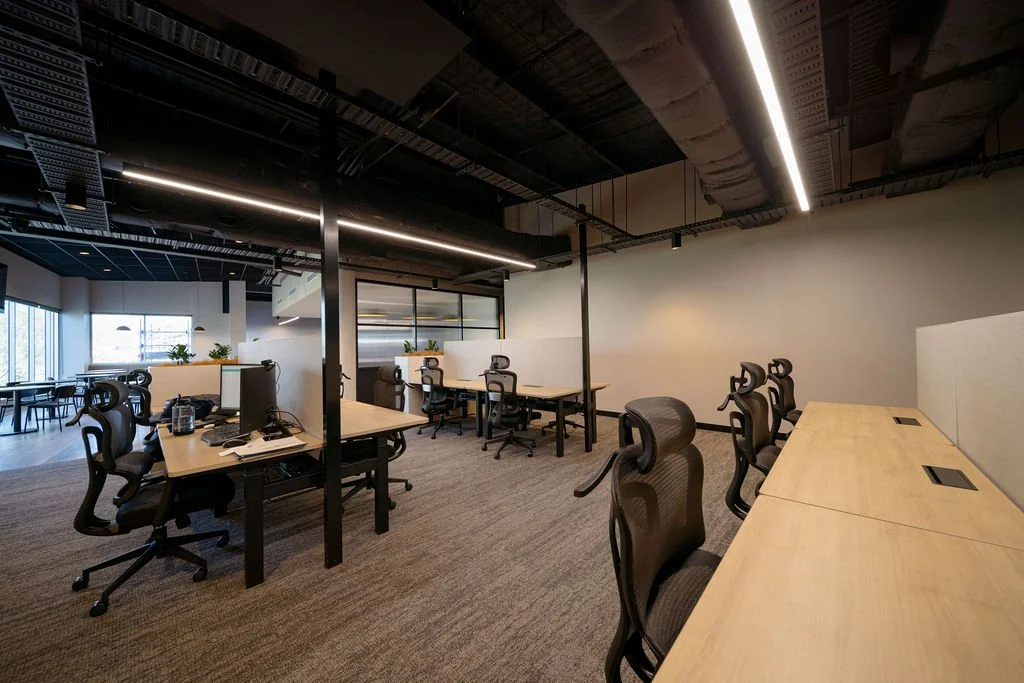
Professionalism without the infrastructure
Reducing overheads does not need to mean compromising on how a business presents itself.
For consultants, advisors and other professional service businesses, the environment in which clients are welcomed still matters.
A well-designed flexible workspace can provide the meeting rooms, technology, shared amenities and professional setting expected of an established office, without each business carrying the full cost of creating it.
This is where cost-effective workspace solutions can offer value beyond simple overhead reduction.
The business gains access to an environment that may otherwise require considerably more time and capital to establish independently.
Flexibility as the business changes
Perhaps the greatest value of a flexible workspace is that it does not require a business to know exactly what it will need several years from now.
Teams grow. Working patterns change. New opportunities appear.
A workspace that can respond to those changes can remove some of the pressure to predict them.
For Gold Coast businesses, flexible workspaces for small businesses can offer a way to maintain a professional presence while keeping fixed costs and long-term commitments more considered.
The question is not simply whether coworking is cheaper than a traditional office.
It is whether the space you are paying for reflects the way your business actually works.
Sometimes, the most valuable office is the one that gives you room to change.
