
Where Work Ends and Home Begins
How flexible workspaces can help independent professionals create greater focus, structure and separation between work and home.
For many solo consultants and independent professionals, working from home starts as the ideal arrangement. It offers flexibility, lower overheads and more control over the day.
However, over time, the boundaries can begin to blur. The dining table becomes a desk. Personal tasks compete for attention. Work stays visible long after the day is meant to be over.
Flexible workspaces can help create clearer boundaries between work and home by providing a dedicated place for focus, client meetings and a more structured routine.
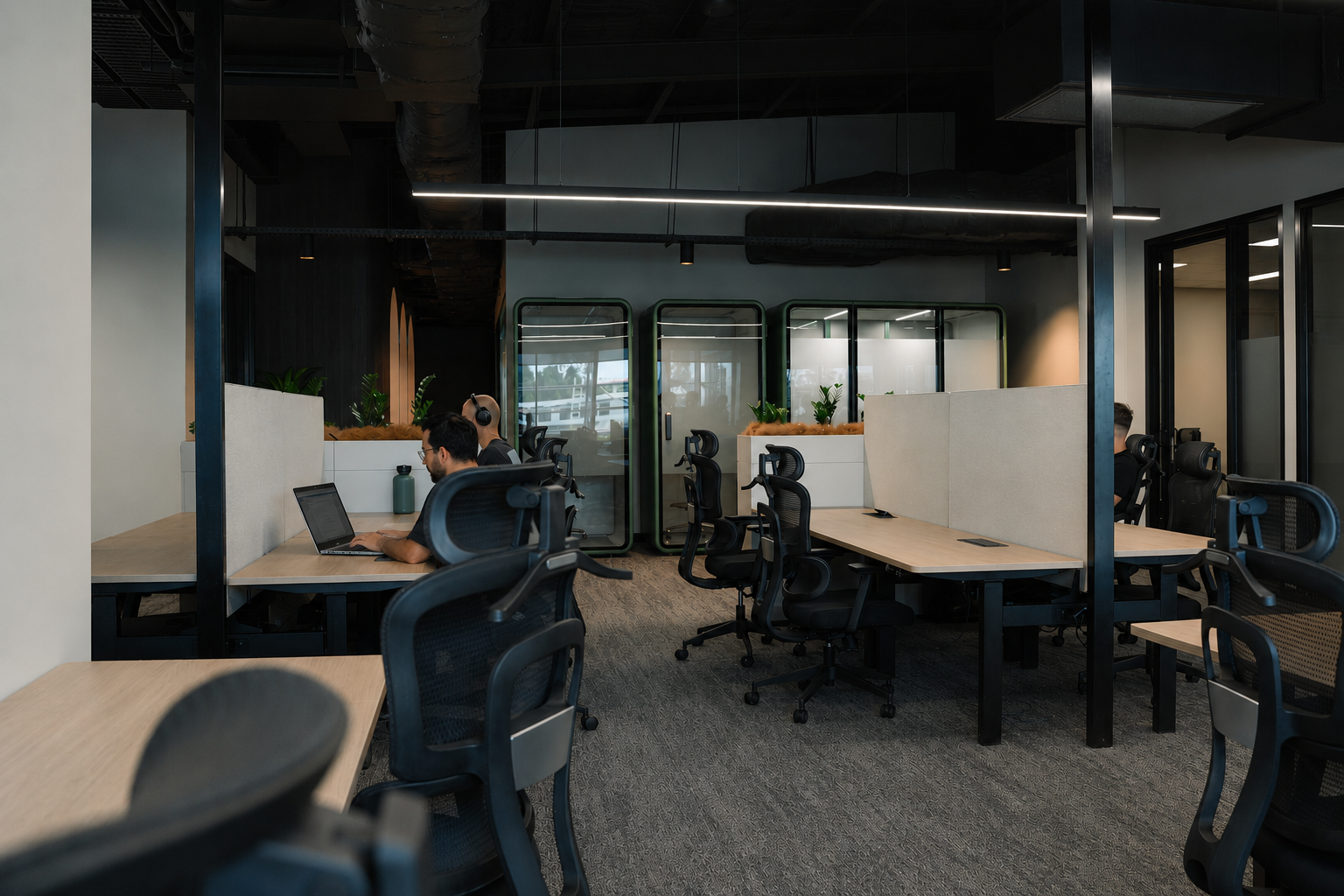
Creating clearer boundaries
Travelling from home to a dedicated workspace creates a natural beginning and end to the working day.
Arriving to a workspace signals that it is time to focus, and leaving makes it easier to switch off and return home without work occupying the same physical space.
For independent professionals, this can support a more consistent routine and a healthier work-life balance.
It is not necessarily about spending more time working. Often, it is about making better use of the time available.
An environment designed for focus
Working from home can quickly begin to feel like living at work. Emails at midnight. Slack notifications over dinner. It can be difficult to switch off when there is no clear physical boundary between the two.
Flexible workspaces create that boundary. You arrive, focus and get the work done. Then you leave, and the working day ends with you.
That separation matters. It helps protect evenings, preserve weekends and create a more sustainable routine. It also helps the people around you, whether partners, housemates or family, understand when you are working and when you are present at home.
This can be especially valuable for work that requires concentration, including strategy, writing, planning and client preparation.
It also provides a more professional setting for conversations that may not suit a café or home office.
Connection without distraction
Working independently does not always mean wanting to work alone.
One of the quieter benefits of shared office spaces is being around other professionals. A familiar face, a short conversation or the opportunity to connect with someone new can bring energy to the day without interrupting focused work.
As Harrison from Puzzle Logistics shared:
“At Riva, you’ve got the people, you’ve got the support, and you’ve got the vibe that helps you believe.”
For solo consultants, that sense of connection can make independent work feel less isolated while still providing privacy and control over the day.

Flexibility that suits the way you work
A flexible workspace does not need to replace working from home completely.
For many professionals, the most effective remote work solution is a combination of both. Home may suit quieter or more flexible days, while a dedicated workspace can support client meetings, focused work and days that need more structure.
The value lies in choosing the right environment for the work you need to do.
A flexible workspace may be worth considering when working from home begins to affect your focus, routine or ability to switch off.
The aim is not to return to a traditional office routine. It is to create a working week with more focus, structure and flexibility.
Sometimes, a better boundary begins with a change of space.
